If you own a home in Southeast Michigan long enough, you will probably deal with water in the basement. Spring thaw saturates the ground. Summer storms drop two inches of rain in an hour and overwhelm storm sewers in Sterling Heights, Warren, and St. Clair Shores. Aging sump pumps fail on the one night they are needed most.
This guide covers the full recovery, in order. Skim to the section you need.
Step 1: Figure out where the water came from
The source decides everything that follows, including whether insurance pays and how the water has to be handled.
- Sump pump failure or groundwater seepage: clean water, but usually not covered by a standard policy without a rider.
- Burst pipe, water heater, or appliance: clean water and usually covered.
- Sewer or drain backup: contaminated water that requires disinfection and often a separate insurance endorsement.
- Surface flooding from outside: contaminated and typically requires flood insurance.
Step 2: Make it safe
- Do not enter standing water if it is near the electrical panel, outlets, or the furnace. Cut power at the main if you can do so from a dry spot.
- Turn off the gas if the water is near the water heater or furnace burner.
- Treat any sewer or outside floodwater as contaminated. Boots, gloves, and no kids or pets.
Step 3: Document, then call your insurer
Photos and video of everything before you move it. Note the time you found the water and, if you know it, the time it started. Call the insurance company the same day and describe the source accurately. Adjusters across Oakland, Macomb, and Wayne County process thousands of these claims. Clear documentation moves yours to the front.
Step 4: Get the water out
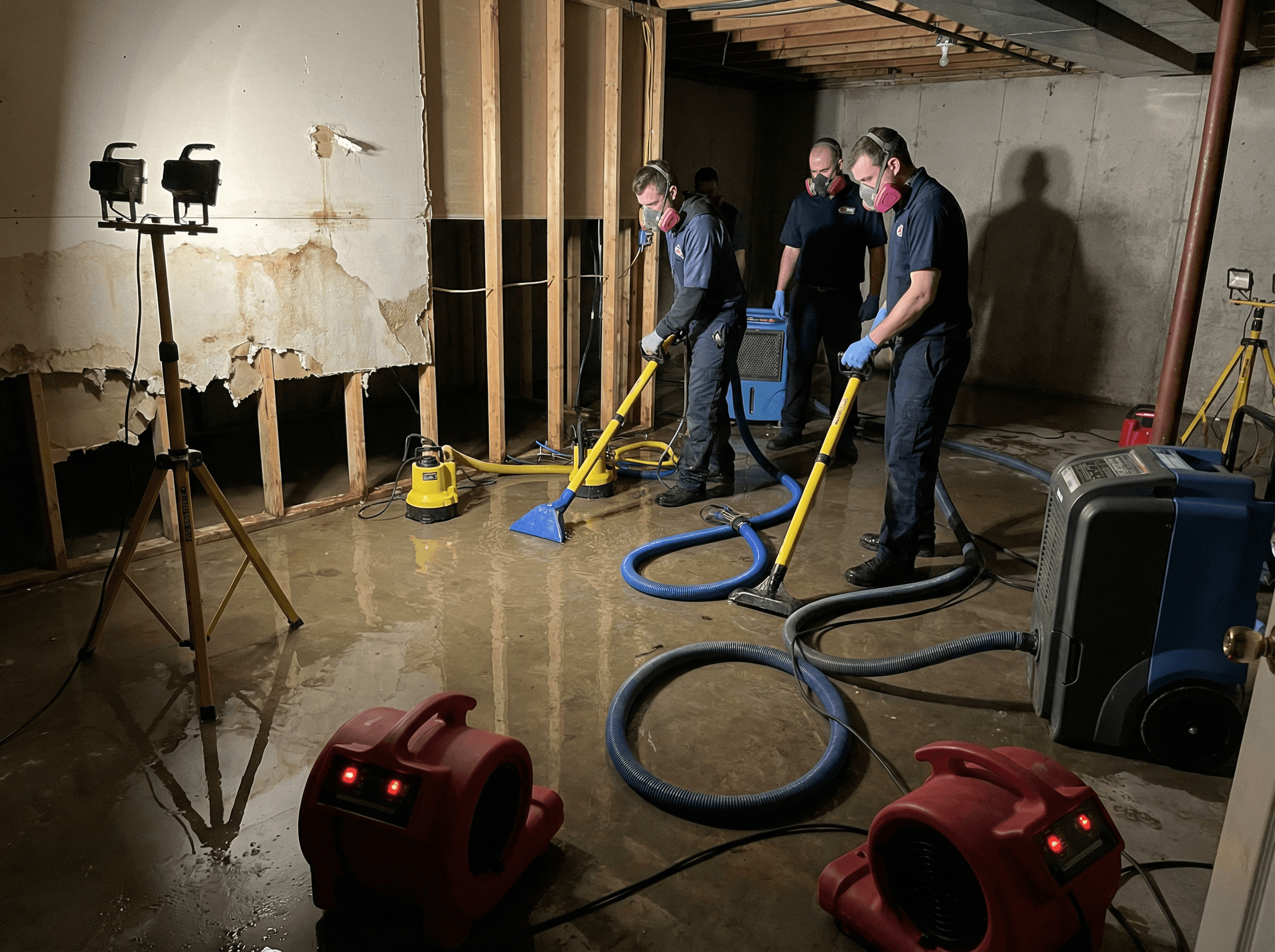
For an inch or two of clean water, a wet vac and a sump pump will do. For more than that, or for any contaminated water, a restoration company with truck-mounted extraction will remove in an hour what would take you a day.
Step 5: Decide what stays and what goes
- Goes: carpet pad, soaked drywall below the water line, particleboard furniture, cardboard, insulation, and anything porous touched by sewer water.
- Often stays: solid wood furniture, concrete, tile, and metal, once cleaned and dried.
- Judgment call: hardwood floors, finished drywall that got damp but not soaked, and upholstered furniture in clean-water losses.
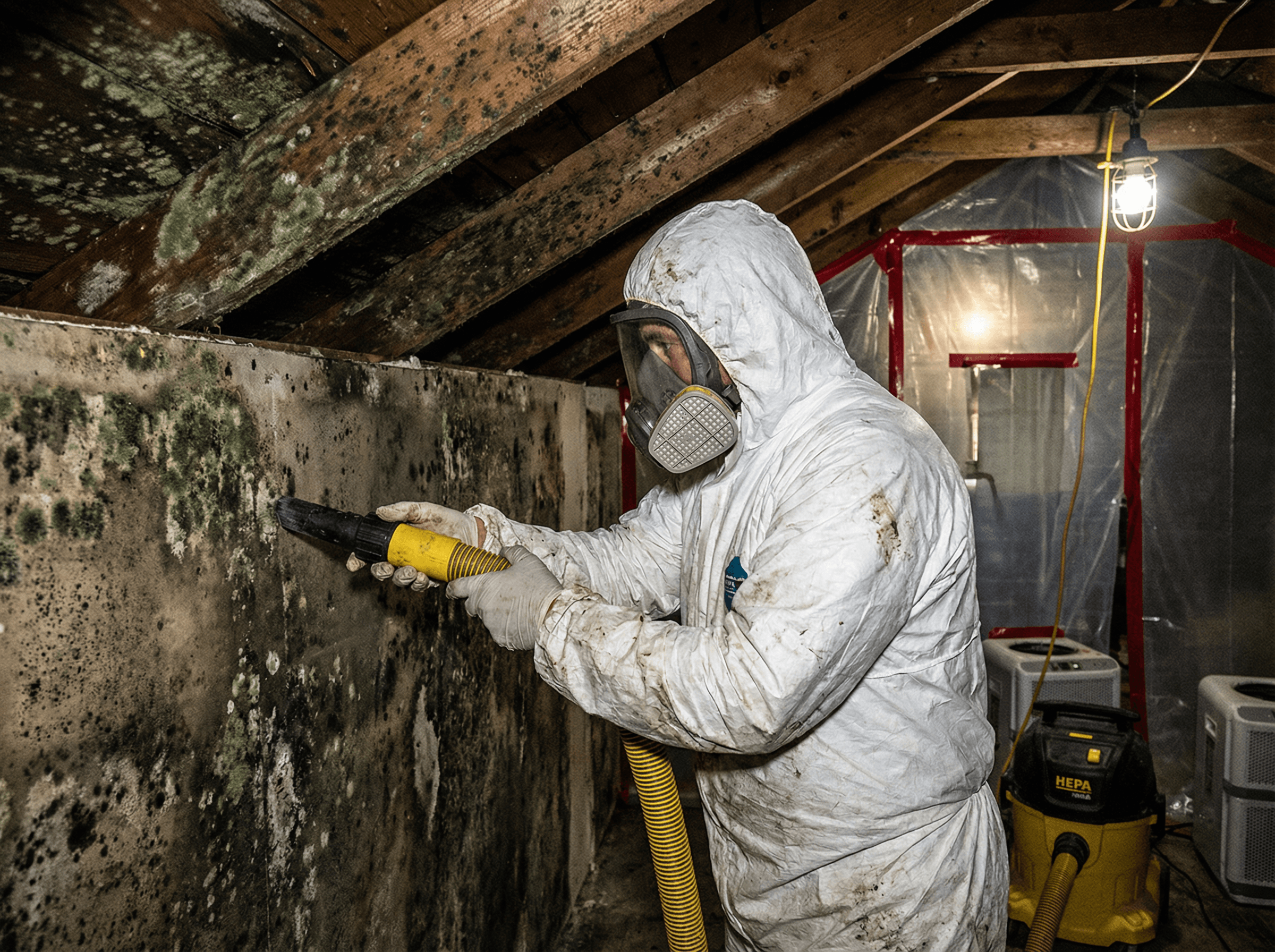
The standard move in a finished basement is a flood cut: removing the bottom two feet of drywall so the wall cavity can dry and be inspected. It looks drastic. It is far cheaper than the mold remediation that follows when a wet cavity is sealed up.
Step 6: Dry it properly
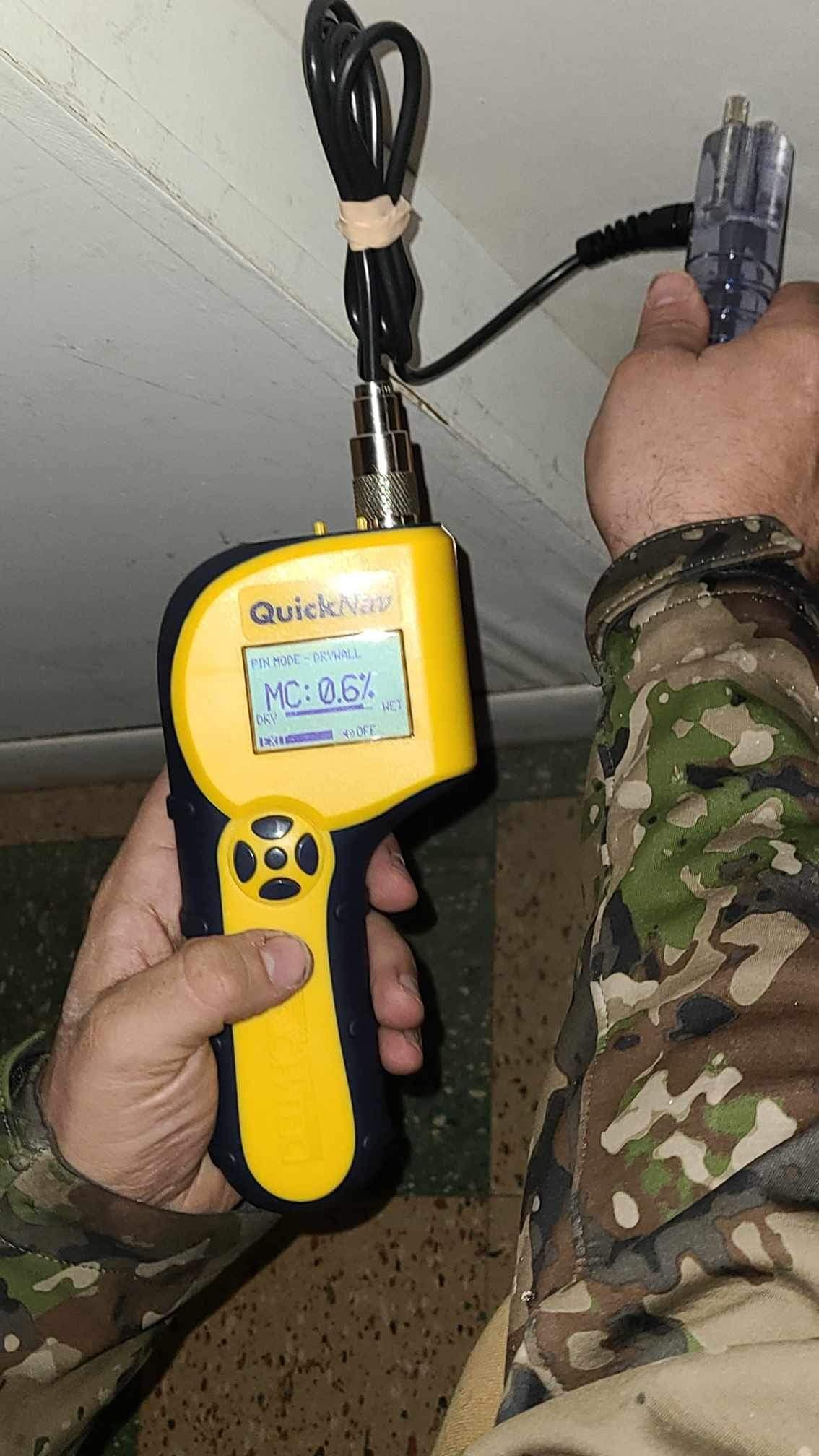
This is where most DIY recoveries go wrong. A basement that feels dry to the hand can hold water in concrete, wood, and drywall for weeks. Professional drying means commercial air movers, a dehumidifier sized to the space, and daily moisture-meter readings until materials hit their dry standard. Expect three to five days for a typical basement in Livonia or Clinton Township, longer for hardwood or a large finished space.
Step 7: Prevent the next one
- Add a battery or water-powered backup sump pump. Most Michigan basement floods we see are pump failures during power outages.
- Install a backwater valve if you have ever had a sewer backup.
- Extend downspouts at least six feet from the foundation and regrade soil away from the house.
- Put a water alarm on the floor near the sump pit and the water heater.
- Keep storage on shelves, not on the floor.
Micronix provides same-day flooded basement cleanup and water damage restoration across Southeast Michigan, from Troy and Rochester Hills to Canton and Grosse Pointe. We extract, dry, document, and treat for mold so the basement you get back is actually dry.
Need help with this in Southeast Michigan?
Micronix serves Oakland, Macomb, and Wayne County with same-day response. Written estimates before any work begins.